

Tile & Grout Deep Cleaning with Sealer
Here is a short video of tile deep steam cleaning.
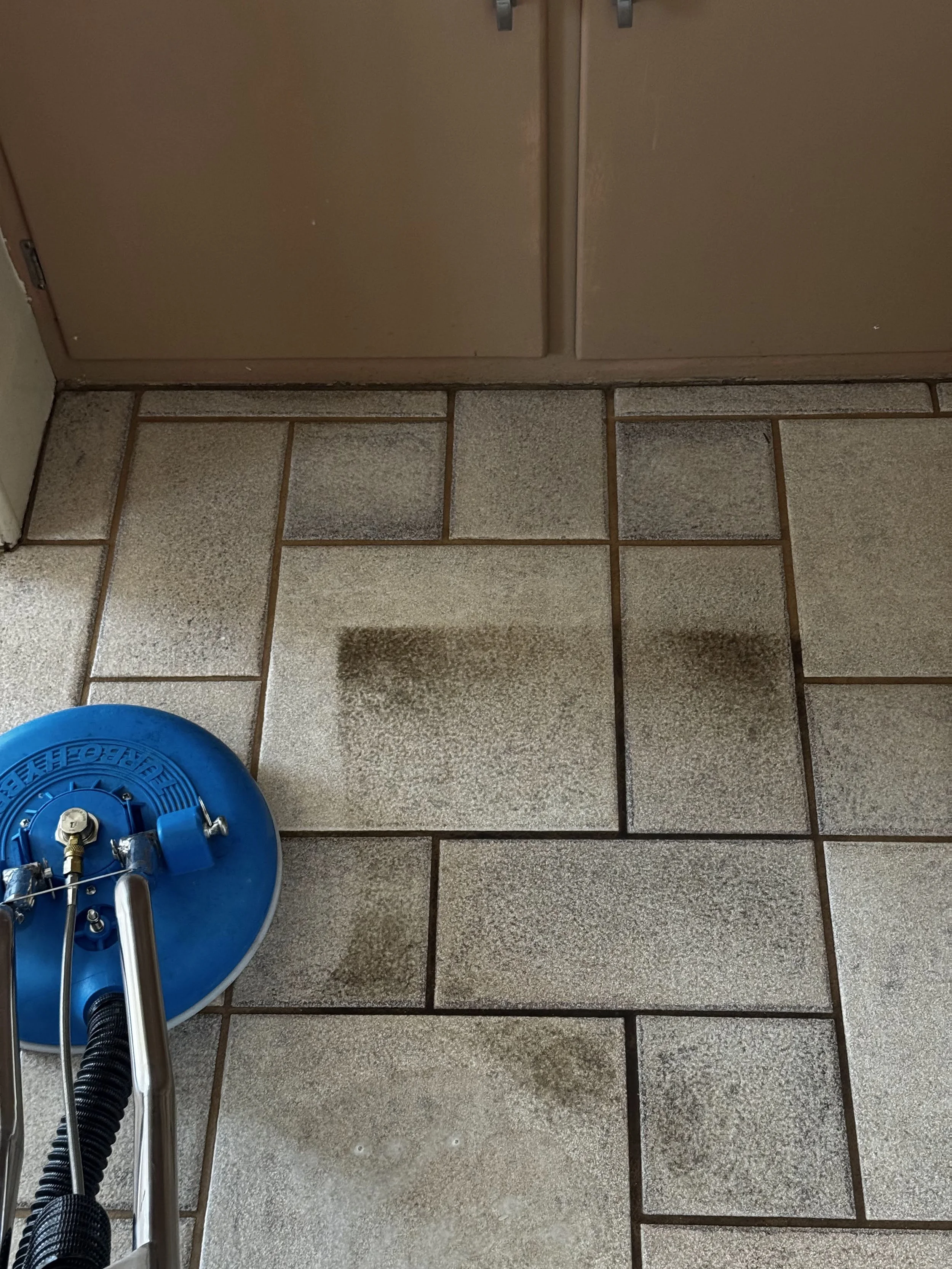
We start by soaking tile and grout using a high alkaline PH solution to help remove years of baked on grime/dirt/oils.
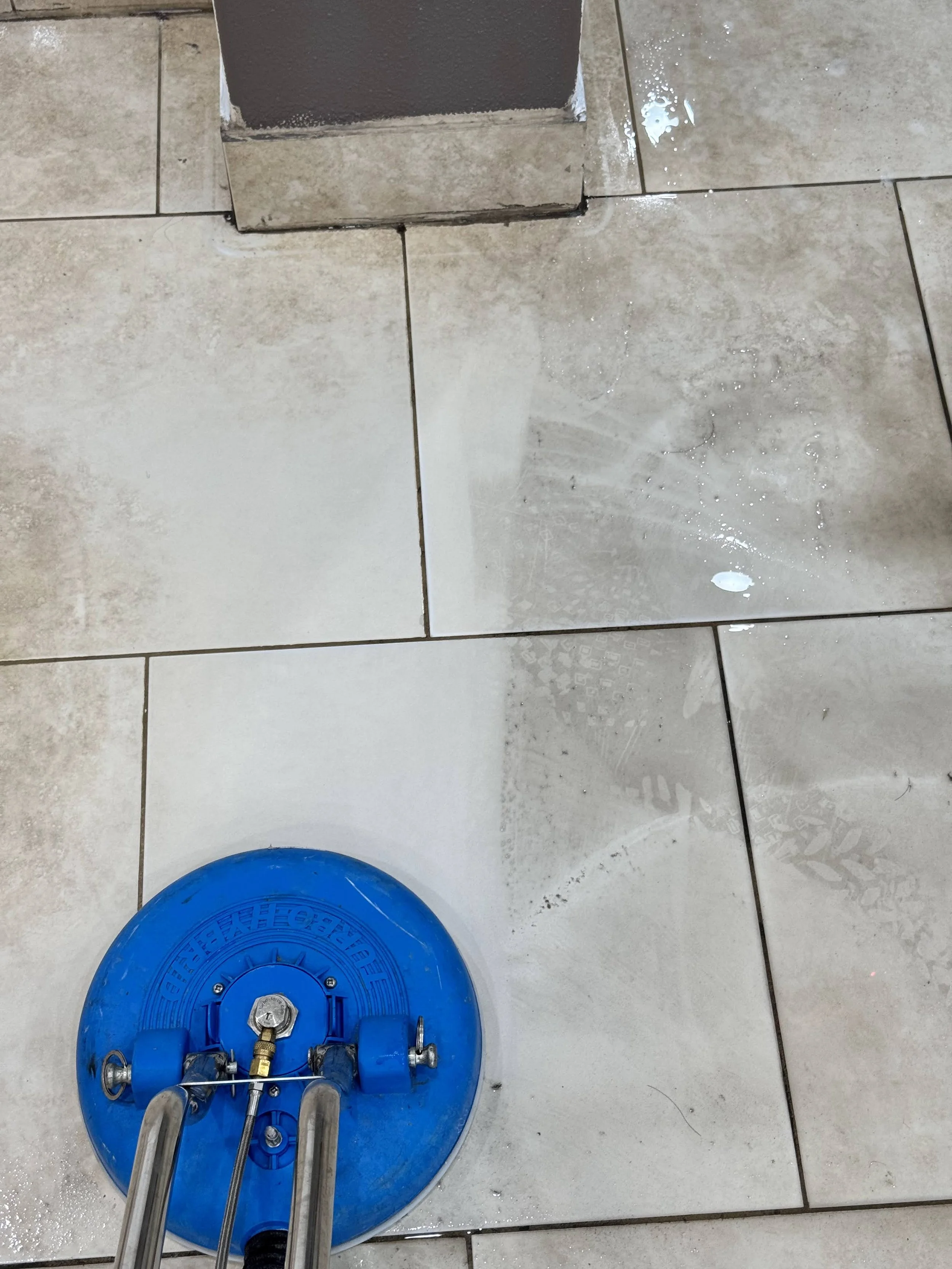
Solution is allow to dwell before using a powered tile brush to agitate the solution in and start removing the build up. At this stage we are able to see a huge difference, and tiles start looking clean. Some competitors use this system only as they don’t have a gas powered steamer.
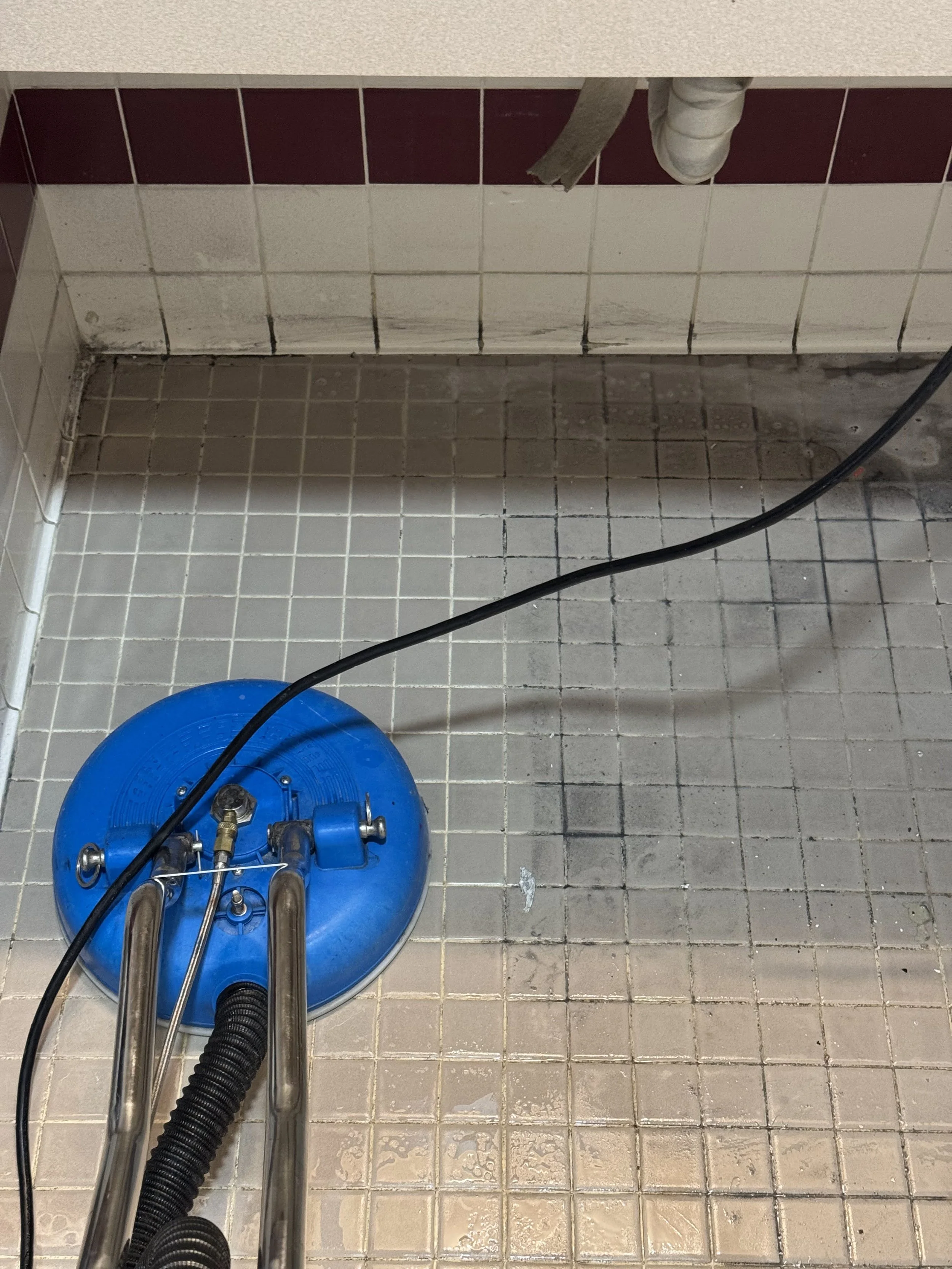
We then come with our gas powered high heat/high PSI steamer to rinse out the solution and really clean the tile. Most competitors who own this system skip the brushing, as this system is very effective on its own. We just like to be thorough !
We then dry the floors using our air movers before sealing them using Miracle Sealer from Rustoleom. Its pricy but rated for up to 20 years!
How Do Professionals Clean Tile and Grout?
July 24, 2026
A tile floor can look clean from across the room while the grout tells a different story up close. Dark traffic lanes, greasy kitchen residue, soap buildup, and ground-in soil settle into grout’s tiny pores over time. So, how do professionals clean tile and grout without damaging the surface or simply spreading the dirt around? The answer is a controlled process: identify the tile, loosen the soil, agitate it, extract it, and leave the floor properly rinsed.
For homeowners, renters, landlords, and property managers, the difference matters. A mop can maintain a floor between deep cleanings, but it usually cannot pull embedded soil out of porous grout. Professional tile cleaning is designed to remove that buildup rather than cover it up.
How Do Professionals Clean Tile and Grout Step by Step?
A good technician does not start by applying strong chemicals everywhere. First comes an inspection. Tile and grout are not all the same, and the safest cleaning approach depends on the surface, the type of soil, the grout condition, and whether sealers or coatings are present.
Ceramic and porcelain tile are generally durable, but natural stone such as travertine, marble, limestone, or slate requires more care. Acidic cleaners can etch or dull certain stones. Cracked tile, loose grout, failed caulk, and existing discoloration also need to be identified before cleaning begins. Deep cleaning can improve a floor’s appearance, but it cannot repair missing grout or reverse permanent damage.
1. Dry soil is removed first
Professionals begin by vacuuming or sweeping away loose dirt, pet hair, sand, and debris. This is not a throwaway step. Sand and gritty debris can act like abrasives during cleaning, especially on textured tile or in heavily used entryways.
Removing dry soil also allows the cleaning solution to work on the sticky, oily, or mineral-based buildup that is actually bonded to the floor. If loose dirt is left behind, it can turn into muddy residue once moisture is introduced.
2. The right cleaner is applied and allowed to work
Next, the technician applies a cleaning solution matched to the job. Kitchen floors often need a degreaser because cooking oils and food residue trap dirt in grout lines. Bathroom tile may need treatment for soap scum, body oils, hard-water minerals, or mildew staining. General traffic soil calls for a different approach than heavy grease.
The solution is given a short dwell time so it can break down the buildup. More chemical is not automatically better. Using the wrong product, leaving it on too long, or skipping a rinse can leave residue behind and make a floor attract soil faster. A professional method uses enough product to do the job, followed by proper extraction.
3. Tile and grout receive mechanical agitation
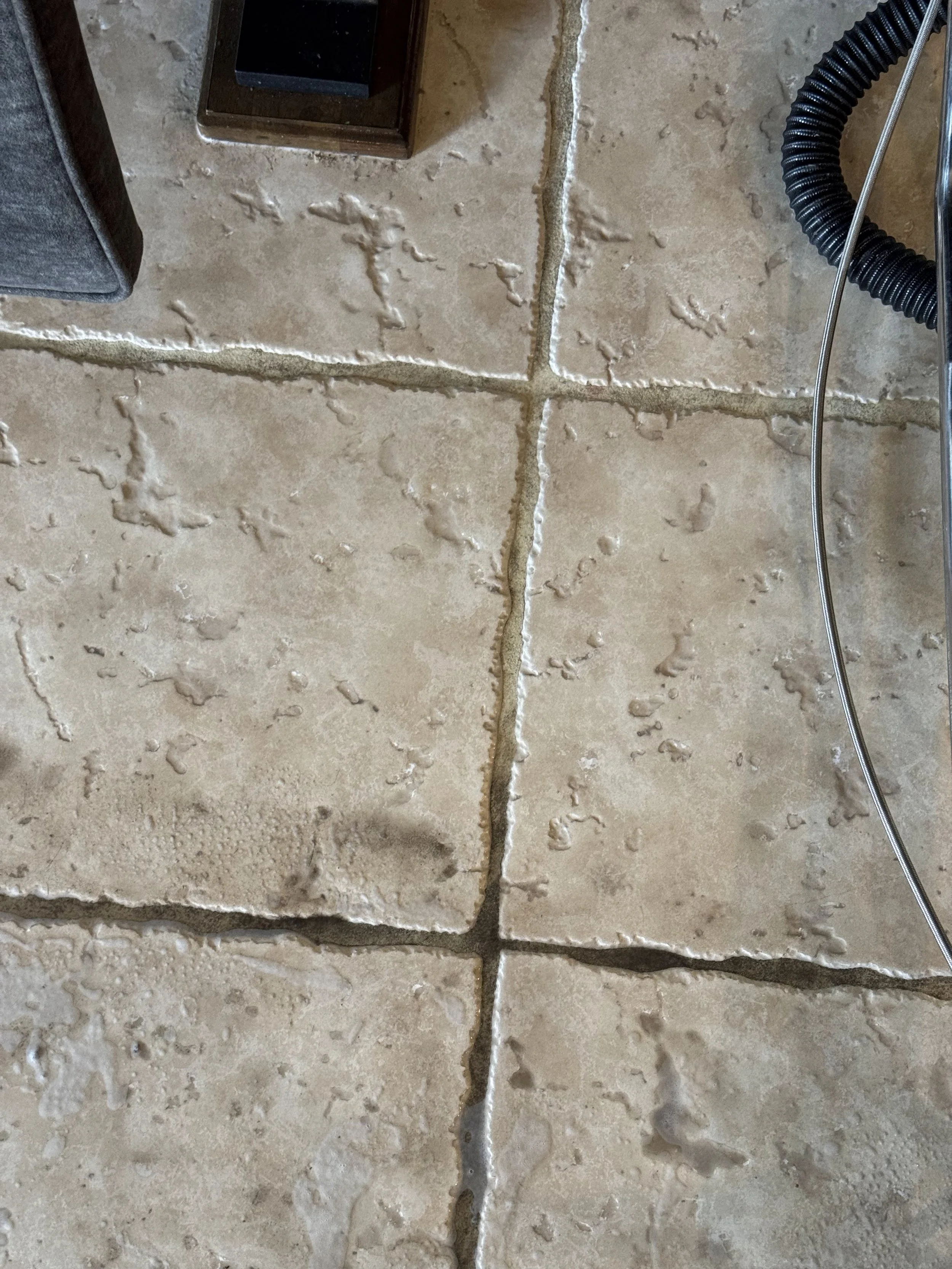
Grout is lower than the tile surface and has a rough, porous texture, which is why ordinary mopping often misses it. Professionals use brushes, rotary equipment, or other agitation tools to work the cleaner into the grout lines and lift soil from textured tile.
This is where technique matters. Too little agitation leaves embedded dirt behind. Excessive pressure, aggressive wire brushes, or harsh abrasives can scratch certain finishes or weaken already-damaged grout. The goal is to loosen contamination without creating a new problem.
4. Hot water extraction removes the loosened soil
After the soil has been broken up, professional equipment rinses and recovers it. Many tile cleaning services use hot water extraction, often called steam cleaning, although the cleaning water is typically hot rather than dry steam. The machine delivers heated water and pressure to rinse the surface, then immediately vacuums the dirty water away.
This is the step that separates a true deep clean from a quick scrub. Instead of pushing dirty water across the floor with a mop, extraction removes the suspended soil, cleaning solution, and moisture. Truck-mounted equipment can provide strong heat, pressure, and vacuum recovery, which is especially useful for large areas, heavy soil, and rental turnover work.
Pressure has to be controlled. A capable technician adjusts the process for the floor rather than assuming every tile can handle the same setting. Delicate natural stone, damaged grout, and certain installations may require a gentler method.
5. Detail work and a final inspection finish the job
Edges, corners, baseboards, shower perimeters, and tight spaces often need additional attention because large cleaning tools cannot reach every area. The technician may detail these locations by hand, then make a final pass to ensure the floor is rinsed and no dirty water has been left behind.
The final inspection should be straightforward. Look at the grout in the main walkways, not only in hidden corners. Check whether stubborn stains improved and whether any remaining discoloration is actually permanent staining, worn grout, or a previous coating. An honest cleaner will explain the difference instead of promising that every aged grout line will look brand new.
Why Mopping Usually Does Not Clean Grout Deeply
Mopping has a place. It removes fresh spills and helps maintain a clean floor. But when the mop water becomes dirty, much of that water can settle into the low grout lines. The tile may dry looking better, while the porous grout retains fine soil and residue.
Some common floor products create another issue: they leave a shine-enhancing film. That film can temporarily make tile look polished, but repeated use may lead to a dull, sticky-looking buildup that captures dirt. If a floor seems to get dirty again quickly after mopping, residue may be part of the problem.
For routine care, use a neutral cleaner that is appropriate for the tile, change the water often, and avoid over-wetting the floor. For deep-set traffic soil, kitchen grease, or neglected grout, extraction and agitation are usually more effective than adding stronger store-bought cleaner.
What Professional Tile Cleaning Can and Cannot Fix
Professional cleaning can make a major visual difference when grout is dark from soil, oils, or soap residue. It can also improve the cleanliness of textured tile that feels rough or looks dull even after routine mopping. In many homes, the biggest change appears in hallways, kitchen work areas, bathrooms, and doorways.
Still, cleaning has limits. Grout can be permanently stained by rust, hair dye, certain spills, or years of neglected buildup. White grout may have naturally aged or absorbed color below the surface. Cracks, chips, missing grout, and failing caulk require repair, not cleaning.
Color sealing or grout staining can be an option when grout is clean but unevenly discolored. This is different from clear sealing. A color seal changes the grout’s appearance, while a clear penetrating sealer is intended to reduce how quickly future spills and soil absorb. The right choice depends on the grout’s condition and the look you want.
Should Grout Be Sealed After Cleaning?
Sealing is often worthwhile for cement-based grout in kitchens, bathrooms, entryways, and other high-use areas. A quality penetrating sealer helps slow absorption, making routine cleanup easier. It does not make grout stain-proof, and it does not eliminate regular cleaning, but it can provide useful protection.
Not every floor needs the same treatment. Some grout products are already more stain resistant, epoxy grout has different properties, and some tile surfaces need special care around sealers. A professional should confirm what is on the floor before recommending an added service.
If you are hiring a cleaner, ask what is included in the quoted price: inspection, pre-treatment, agitation, hot water extraction, detail work, and any optional sealing. Clear answers before the appointment are better than surprise add-ons after a technician arrives.
For Inland Empire homes and local rental properties, IE Carpet Care uses an owner-operated approach to tile and grout cleaning with professional-grade extraction equipment and straightforward pricing. The goal is simple: clean the floor thoroughly, explain what the process can realistically accomplish, and avoid surprise charges.
A clean tile floor should not depend on harsh chemicals or a temporary shine. When the grout is properly treated, agitated, rinsed, and extracted, the result is a floor that looks cleaner because the soil has actually been removed.